If you work in software, you probably spend a slightly ridiculous amount of time staring at screens.
Laptop screens.
Phone screens.
Code editors.
Documentation.
Slack.
GitHub.
Browser tabs that somehow multiply throughout the day.
So when you finally have time to read something longer, the last thing you may want is another glowing screen.
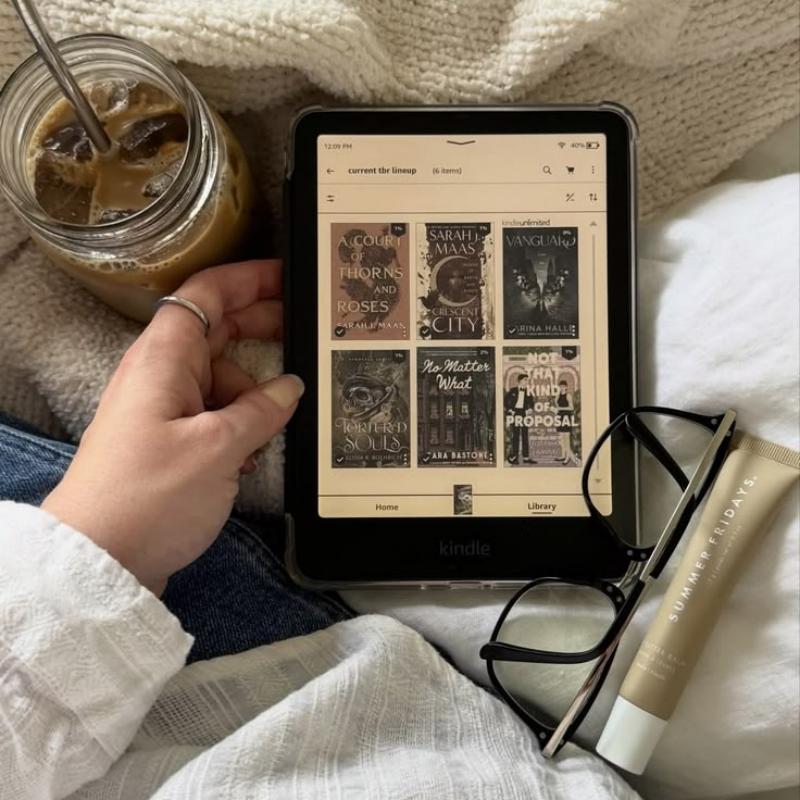
That is one reason Kindle has become such a popular companion for software engineers and other people who spend most of their workday in front of a computer.
For long-form reading, Kindle feels intentionally simple. There are no Slack notifications popping up, no random tabs waiting to be opened, and no temptation to check your email every five minutes.
You just open your book and read.
Whether you're working through a programming book, getting into a sci-fi novel, or finally reading that book everyone has recommended for years, Kindle makes it surprisingly easy to spend more time with long-form content.
And once you start carrying your Kindle everywhere, a few practical accessories can make the experience even better.
Why Software Engineers Read So Much
Software engineering is a profession built around learning.
Technologies change.
Programming languages evolve.
Frameworks come and go.
New tools appear constantly.
Even experienced engineers need to keep learning throughout their careers.
That means reading is often part of the job, but reading doesn't always have to mean technical documentation.
A software engineer might spend the workday reading:
- API documentation
- Technical articles
- GitHub repositories
- Architecture documents
- Stack Overflow discussions
- Internal documentation
After work, they may want something completely different.
Maybe a novel.
Maybe a biography.
Maybe a book about psychology.
Maybe a giant fantasy series they've been putting off finishing.
Kindle works well for both sides of that reading life.
Kindle Gives Your Brain a Break From the Computer
This is probably the biggest reason I understand why engineers like Kindle.
After spending eight or nine hours looking at code, switching to another device doesn't necessarily feel relaxing.
Even if the content is interesting, your brain is still processing information through another screen.
Kindle creates a different kind of experience.
The device is dedicated to reading.
There are fewer distractions, fewer notifications, and fewer reasons to leave the page you're on.
That simplicity is surprisingly refreshing.
Instead of opening your laptop because you want to read one article and somehow ending up watching three YouTube videos, you can just pick up your Kindle.
Book open.
Phone down.
That's it.
Long-Form Reading Feels Easier on Kindle
Short-form content is everywhere.
A two-minute video.
A quick Reddit post.
A few Instagram stories.
A headline.
Another notification.
Another headline.
It is incredibly easy to spend an entire evening consuming tiny pieces of information without actually finishing anything.
Long-form reading requires a different kind of attention.
You have to stay with an idea.
Follow a story.
Remember what happened several chapters ago.
Think about what you're reading.
Kindle makes this easier because the device is built around one activity.
Reading.
For software engineers who already spend their workday jumping between windows, that simplicity can feel like a luxury.
Kindle Is Great for Technical Books Too
Of course, Kindle isn't only for novels.
There are plenty of software engineers who use it for professional reading as well.
You might have a list of books about:
- System design
- Software architecture
- Clean code
- Programming languages
- Databases
- Artificial intelligence
- Product development
- Leadership
Technical books can be huge.
Carrying several physical books around isn't exactly convenient, especially if you already have a laptop and other work equipment in your backpack.
A Kindle gives you access to an entire digital library without turning your backpack into a weightlifting session.
Why Engineers Like Minimalist Tech
There is something very appealing about a device that does one thing well.
A laptop can do almost everything.
That's also the problem.
It can do almost everything.
Your laptop can run code, answer emails, play music, show videos, display social media, and open approximately 47 browser tabs at once.
Kindle doesn't compete with that.
It does something much simpler.
It lets you read.
For people who work with complicated systems all day, a simple device can be surprisingly satisfying.
The Kindle You Actually Carry Is the One You Use
A reading device can only help you read more if you actually bring it with you.
This is where accessories start to matter.
If your Kindle feels fragile, you may hesitate to throw it into your backpack.
If the case is bulky, you may leave it at home.
If it's uncomfortable to hold, long reading sessions become less enjoyable.
A good setup removes those little obstacles.
That's why a lightweight magnetic Kindle case can be useful for people who carry their Kindle every day.
Why a Magnetic Kindle Case Makes Sense for Engineers
Software engineers often move between different environments throughout the day.
Home office.
Coworking space.
Coffee shop.
Office.
Library.
Airport.
Your Kindle may be sitting inside a backpack next to a laptop, charger, headphones, and everything else you carry around.
A protective case helps prevent the everyday scratches and bumps that come with that lifestyle.
But there is another consideration: weight.
If you already have a laptop in your bag, adding another bulky device isn't ideal.
A slim magnetic Kindle case can provide protection without making the Kindle feel unnecessarily heavy.
That combination of protection and portability is especially appealing for people who use their Kindle every day.
A Minimalist Kindle Setup for Software Engineers
Honestly, you don't need much.
If I were putting together a simple setup for someone who spends all day coding, I'd keep it pretty minimal:
Kindle + protective case + comfortable reading spot.
That's really it.
Maybe add a reading stand if you like hands-free reading.
Maybe add a small reading light if you prefer reading late at night.
But you don't need an entire collection of accessories.
The best setup is the one that makes it easier to actually read.
Reading After Coding Is a Different Experience
There's something really nice about finishing a long coding session and switching to a completely different type of thinking.
Imagine spending the day debugging an API.
Then at night, you're reading a mystery novel.
No bugs.
No tickets.
No pull requests.
No "quick question" from Slack.
Just a story.
That separation can make reading feel much more restorative.
And honestly, sometimes the best book after a technical workday is one that has absolutely nothing to do with technology.
Create a No-Screen Transition
If you work remotely, the boundary between work and personal life can be especially blurry.
Your desk might be five feet from your couch.
Your laptop is always there.
You might even check Slack after dinner.
Creating a simple transition can help.
Close the laptop.
Put your phone somewhere else.
Make a drink.
Pick up your Kindle.
Read for twenty or thirty minutes.
Over time, your brain starts recognizing that routine as the end of the workday.
Kindle for Coffee Shop Reading
Software engineers are practically part of the coffee shop ecosystem at this point.
Whether you're working remotely or simply meeting a friend, coffee shops are also great places to read.
A Kindle is much easier to carry than a hardcover book, and it doesn't take up much space on a small café table.
I especially like the combination of coffee + Kindle + headphones + absolutely no work.
It feels like a tiny vacation without actually going anywhere.
Reading During Commutes and Travel
Software engineers who travel for work can also benefit from having a digital library with them.
Airports are basically made for reading.
You have a boarding time.
You have a gate.
You have somewhere to sit.
And suddenly you have an hour you didn't know what to do with.
Instead of opening your laptop and accidentally turning your travel day into another workday, Kindle gives you an easy way to switch into personal time.
The same goes for trains, hotel rooms, and long weekend trips.
A Protective Case Is More Important Than It Looks
People sometimes think of a Kindle case as purely decorative.
It definitely can be.
There are plenty of beautiful cases out there, and honestly, changing your Kindle case can be a fun way to personalize it.
But if you carry your Kindle constantly, protection is the bigger reason to have one.
A case can help protect against:
- Scratches
- Minor impacts
- Everyday wear
- Backpack friction
- Accidental bumps
For a device that might become your everyday reading companion, that extra layer of protection is worth considering.
Why Some Readers Prefer Magnetic Designs
A magnetic Kindle case has a particularly clean feel.
The design can remain relatively slim while still providing everyday protection.
This is useful for minimalist readers who don't want their Kindle to feel overbuilt.
And if your Kindle is constantly moving between your desk, backpack, couch, and nightstand, having a case that feels lightweight makes a difference.
The less friction there is between you and your book, the more likely you are to pick it up.
A Small Upgrade I Actually Understand
If I were recommending one practical upgrade to someone who already owns a Kindle, I wouldn't tell them to buy ten different accessories.
I'd start with the case.
Something lightweight.
Something protective.
Something that doesn't make the Kindle feel bulky.
Options such as the Ganinno magnetic Kindle case fit nicely into that kind of minimalist setup. Its slim profile is designed for readers who want everyday protection while keeping the Kindle easy to carry.
For someone who takes a Kindle from a home office to a coffee shop, then tosses it into a backpack before heading somewhere else, that's exactly the kind of accessory that makes sense.
It's not really about adding another gadget.
It's about making the gadget you already use easier to live with.
Use a Stand When You Want to Give Your Hands a Break
Another useful addition for long-form readers is a Kindle stand.
If you're reading for an hour or more, holding the device continuously can eventually become uncomfortable.
A stand allows you to position the Kindle at a comfortable viewing angle while keeping your hands free.
This works particularly well when:
- You're reading at a desk
- You're drinking coffee
- You're eating breakfast
- You're relaxing on the couch
- You're following a long technical book
You don't necessarily need a stand all the time.
But once you have one, you'll probably find a few situations where you wonder why you didn't use one earlier.
Reading Before Bed Instead of Scrolling
This might be the easiest Kindle habit to build.
Put your phone down.
Pick up your Kindle.
Read for twenty minutes.
That's it.
For people who spend the entire day surrounded by notifications and information, ending the day with something quiet can feel really good.
And unlike scrolling, reading gives you a clear stopping point.
One chapter.
One section.
Twenty pages.
You can close the Kindle and call it a night.
Kindle Helps Make Reading a Habit
The biggest advantage isn't actually the device.
It's convenience.
When something is easy to access, you're more likely to do it.
Keep your Kindle next to your bed.
Put it in your backpack.
Leave it on your coffee table.
Bring it to the café.
The more visible it is, the more likely you'll remember that you wanted to read.
And eventually, reading becomes part of your routine instead of something you keep saying you'll get around to.
How to Build a Better Long-Form Reading Routine
If you're trying to read more, don't start by setting an unrealistic goal.
You don't need to finish a book every week.
Try something much smaller.
Read for 15 minutes after work.
Then 20 minutes.
Then maybe 30.
Choose books you're genuinely interested in.
Don't force yourself to finish a book you hate just because you started it.
And keep your Kindle somewhere easy to reach.
The goal is making reading feel enjoyable rather than like another productivity task.
Final Thoughts
For software engineers, Kindle offers something that can be surprisingly hard to find after a long day of coding: simplicity.
You spend your workday solving problems, switching between applications, reading documentation, and staring at a computer.
Reading on Kindle gives you a completely different rhythm.
No notifications.
No endless tabs.
No work messages.
Just a book.
A thoughtful setup can make that experience even better. A lightweight magnetic Kindle case helps protect your device while keeping it easy to carry, while a stand can make longer reading sessions more comfortable.
For readers who prefer a clean, practical setup, something like the Ganinno magnetic Kindle case can fit naturally into that routine. It keeps the focus on the Kindle itself rather than turning your reading setup into another complicated collection of gadgets.
Ultimately, the best Kindle setup isn't about having the most accessories.
It's about removing the little things that get between you and your book.
Close the laptop.
Put the phone down.
Pick up your Kindle.
And give yourself an hour where the only problem you have to solve is finding out what happens next.